
Summary: The residential design is being transformed by aging-in-place. Universal design, smart technology and structural upgrades are being implemented by construction remodeling company and Austin renovation contractors to come up with safer and future ready homes. The value of such renovations is improved independence and higher property value, as well as the fact that homeowners will stay comfortably in the same environment decades.
A house must develop together with its owner. It must be able to embrace change, be mobile and comfortable without infringing on comfort. Due to demographic changes and a higher life expectancy, aging-in-place has evolved to be more than a lifestyle choice but it has become a housing trend.
The leadership in this change is taken up by forward-thinking construction remodeling companies and the experienced Austin renovation contractors. The principles of residential design are restructuring around them, incorporating the universal design, universal accessibility engineering, and aesthetics refinement into a smooth overhaul that promotes independence at all ages of life.
Knowledge on Aging-In-Place: A Strategic Change In Home Design
Aging-in-place can be described as a qualification to live safely, independently, and comfortably in an abode despite age or capability. Instead of retrenching or relocating to assisted living homes, homeowners are also modifying their current homes to suit the needs of the future.
This strategy is motivated by a number of factors:
- Increased life expectancy.
- Increasing costs of healthcare and assisted living.
- Emotions toward current homes.
- Need to feel a sense of self-reliance and pride.
Nevertheless, aging-in-place does not merely presuppose the provision of grab bars or ramps. It entails an extensive design approach that foresees flexibility, cognitive factors, and safety requirements, without rendering the house institutional.
The Role of the Construction Remodeling Companies in the Lifelong Design
Construction remodelling companies have ceased to perform cosmetic facades. They are operating as strategic design partners. Their role includes:
1. Making Long-Term Needs Assessments
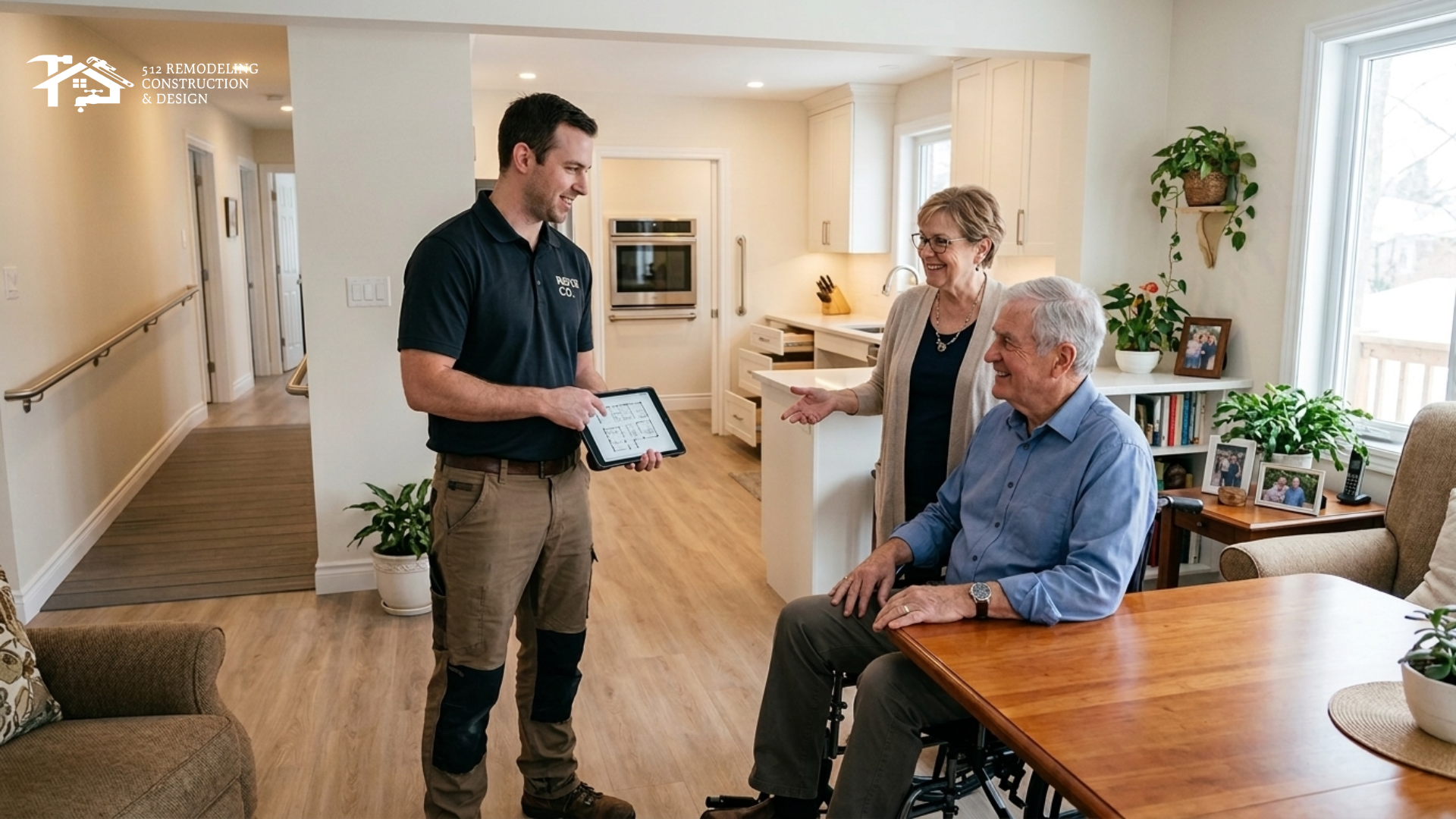
The contractors assess floor plans, entrances, bathrooms, kitchens, and circulation routes to determine obstructions to movement. They take into account the aspects of the provision of a wheelchair in the future, prevention of falls, and emergency management.
2. Incorporating the Universal Design Principles
Universal design is making sure that any person can use the space without making any adaptations. Key elements include:
- Zero-step entries.
- Expanded door frames (at least 36 inches).
- Lever-style door handles.
- Non-slip flooring materials.
- Proper lighting with diffused light.
These are small but effective features boosting protection and at the same time keeping a beautiful architectural appearance.
3. Modifications Of Structure To Accessibility
Several in-place renovations need structural modifications. This could include the elimination of load-bearing walls to form open floor plans, the reduction of countertops, the strengthening of the bathroom walls to accommodate the addition of grab bars in the future, and the redesign of stairways.
The Austin renovation contractors who have been in the business for a long time are well aware of the local building codes and the standards of accessibility compliance, so everything is done to ensure upgrades are both safe and compliant with the local requirements.
Bathroom Transformations: The Space of the highest priority.
The risk of falls in a home poses the most danger in the bathrooms. That is why they frequently become the primary targets of aging-in-place modifications.
Key modifications include:
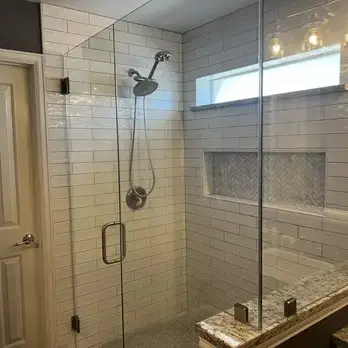
- Curbless walk-in showers.
- Built-in shower seating.
- Handheld shower heads.
- Comfort-height toilets.
- Flooring made of slip-resistant tiles.
- Support bar reinforcement of walls.
The contemporary solution makes such upgrades appear modern as opposed to clinical. Aesthetic features are kept with frameless glass, neutral palettes, and inbuilt lighting.
Kitchen Redesign: Ergonomics Mart
The kitchen is the working centre of a household. Kitchens for aging-in-place are developed to be easy to move and less straining.
Enhancements may include:
- Drawers and pull-out shelving.
- Touchless faucets.
- Safety induction cooktops.
- Reduced countertops to sit on.
- Side-opening ovens.
- Rounded counter edges.
Strategic layout planning minimizes unwarranted bending, reaching, and lifting. Construction remodeling companies that are professionally oriented focus on the optimization of workflow, while still having visual cohesion.
Smart Home Technology: Increasing Independence
Aging-in-place design has become dependent on technology. The contemporary renovations are increasingly using:
- Lighting and thermostats that are voice-controlled.
- Smart security systems.
- Automated window treatments.
- Remote integration of health monitoring.
- Video doorbells.
These characteristics help autonomy and enhance safety without apparent complexity. A proficient Austin renovation company lays out electrical and low-voltage systems to ensure a smooth integration.
Layout Reconfiguring and First-Floors Living
Multi-storey houses pose a challenge in the long term. Contractors usually repackage layouts such that they include:
- Main level primary bedroom suites.
- First-floor laundry rooms.
- Expanded hallways.
- Eradicated barriers between rooms.
In cases of structural constraints, some options are stair lifts or residential lifts. The aim is not responsive design but proactive design.
Flooring, Lighting, and Safety Engineering
Minor details matter a lot in regard to safety. The professionals involved in renovation are focused on:
- Dark contrasts between rooms.
- Anti-glare lighting.
- Motion-sensor night lights.
- Flooring is not abrupt in level alteration.
These advancements minimize the risk of falls and improve spatial awareness, especially in low-light environments.
Financial Planning and ROI Reflections
The process of aging-in-place renovations is an investment. Nonetheless, they can be very lucrative in terms of:
- Increased property value.
- Less spending on healthcare in the long term.
- Late assisted living requirement.
Accessible homes attract a wider audience of buyers, such as multigenerational families and those who have mobility issues.
Conclusion
Aging-in-place is the future of residential designs. It is intelligent, tactical, and based on human-oriented architecture. The definition of what makes a renovation is being redefined by professional construction remodeling firms and seasoned Austin renovation contractors, not just in the present day, but over several decades to come.
Lifelong comfort design does not involve planning to be restricted. It is empowering a sense of independence. And when done properly, these renovations make homes safer, more valuable, and maintain the emotional meaning of home.
FAQs
1. What does aging-in-place renovation mean?
It encompasses the restructuring of a house so that the occupants can live comfortably and on their own terms as they grow old without necessarily moving to assisted living homes.
2. What is the cost of an aging-in-place remodel?
Costs vary based on scope. Small improvements can be accomplished at a couple of thousand dollars, and complete home renovations can cost much more based on the structural modifications.
3. Are aging-in-place upgrades exclusive to the elderly?
No. Universal design is helpful to all age groups of people, such as families with young children and persons with temporary injuries.
4. What is the first room to be remodeled to age-in-place?
The bathrooms are usually given a priority because their risk of falling is higher than kitchens and entryways.
5. Do these upgrades raise the value of homes?
Yes. The characteristics of accessibility tend to expand the market attraction and enhance its resale.