

Summary: A larger house does not mean a house that works better. With careful design changes in areas like storage, lighting, entrances, kitchens, bathrooms, and outdoor spaces, homes can make life easier without adding more space. There are seven effective suggestions for making existing spaces more functional, comfortable, and efficient, which can also inform roofing considerations in the broader home improvement plan.
Sometimes, despite having a reasonable amount of space, houses can still feel cramped. This is because the problem doesn’t come down to square footage, but to where clutter is, how one moves through the home, and how various parts of the home accommodate one’s day-to-day activities.
Not all of the problems need to be solved by rebuilding existing walls or structures. An understandable home remodeling in Austin project should allow you to change how you use existing space without altering the house’s walls.
Here are seven approaches worth considering.
1. Rework the Layout Around Daily Movement
Although a room may seem attractive in theory, its actual usefulness may not be good. The layout of your furniture, the location and direction of your appliances, and the layout of your doorways all affect how you can move around your home.
In the kitchen, relocating an appliance or moving a countertop may improve culinary operations. In the living room, rearranging the seating will allow you to create a better flow without moving any furniture. In the bedroom, the new storage arrangement will free up space.
A refitter can likewise determine whether the presence of a wall, a door, or a furniture arrangement affects how a room functions. The goal is not to eliminate all objects from within the space but to arrange everything in it, taking into account how you lead your life.
2. Turn Underused Areas into Useful Storage
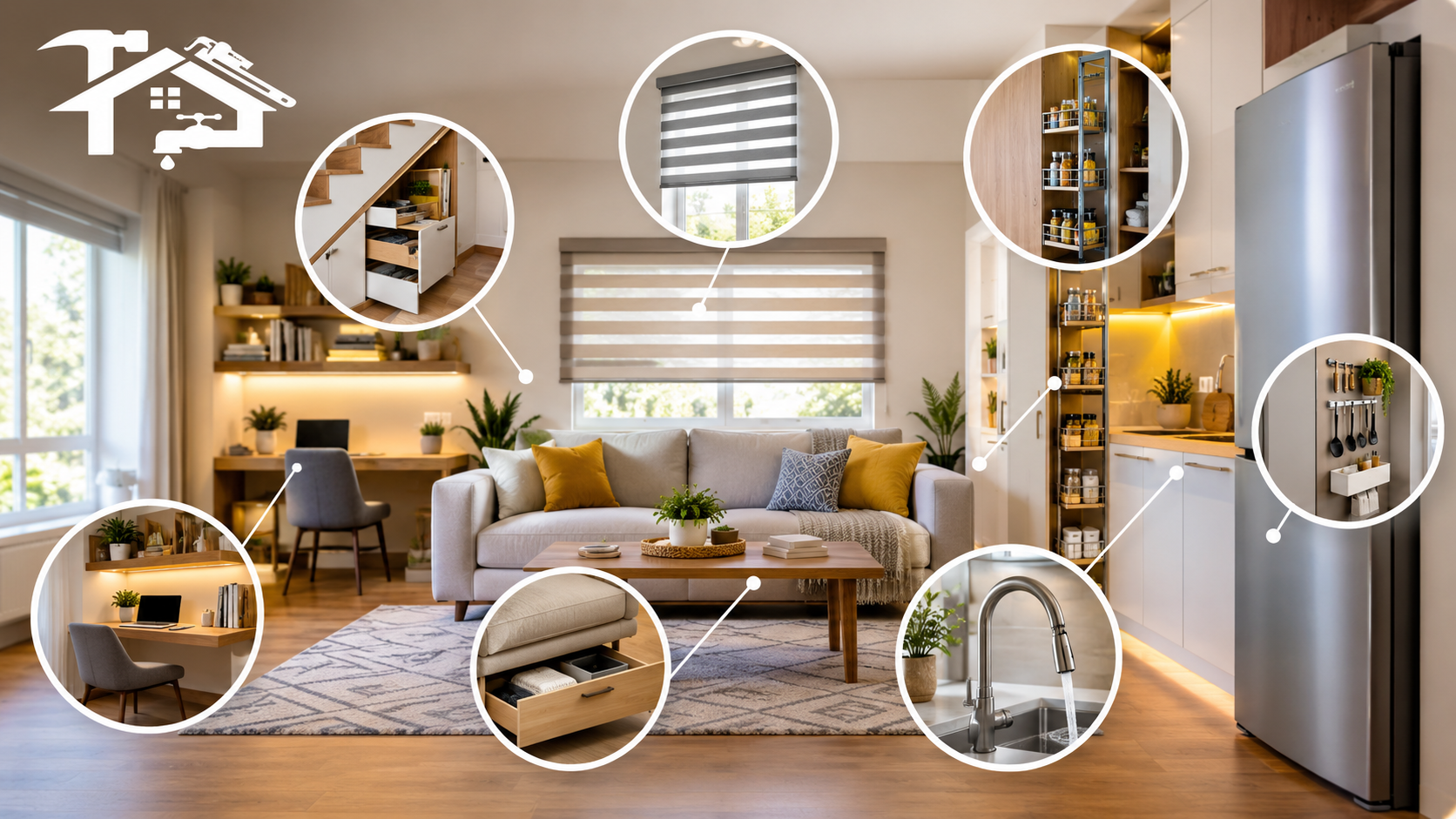
Storage issues make homes feel smaller. You may think closets and cabinets are your only storage options, yet many areas of your home, such as corners, walls, staircases, nooks, and corridors, can serve a useful purpose. During home remodeling in Austin, you can explore these overlooked areas to create storage that fits your home’s layout and your daily routines.
For example, wall shelving creates storage without taking up valuable floor space. A window seat with hidden storage serves two purposes while keeping belongings out of sight. Custom-made furniture also provides practical solutions for narrow or irregular spaces where standard pieces do not fit.
The same principle applies throughout your home: storage works best when it matches your behavior. Think about what you use every day, where you naturally place things, and which areas create clutter. Designing storage around those habits makes existing rooms easier to organize and more comfortable to use.
3. Make the Kitchen Work Harder
A kitchen fulfills various roles. It is used for cooking, eating, studying, chatting, entertainment, and organizing the house.
Here are some common ideas for a functional kitchen improvement:
- Increasing counter space.
- Improving the distribution of items in the cupboards.
- Adding a zone for the pantry.
- Moving the devices that are often used.
- Improving lighting conditions in the kitchen.
- Confining a proper landing space near the refrigerator.
- Adding drawers in deep cabinets.
- Altering the kitchen island.
In certain cases, a whole new kitchen may not be required. It is often possible to achieve impressive results by eliminating certain pain points.
As you are remodeling your home in Austin, think about the aspects that make everything easier rather than focusing only on the design. A kitchen that supports easy cooking, food storage, cleaning, and socializing is a well-functioning kitchen.
4. Improve Lighting Before Adding More Décor
The way that lighting contributes to the usability of your room cannot be overstated. A solitary ceiling fixture can provide illumination but may leave work surfaces, corners, and zoned tasks inadequately lit. Multi-layered lighting provides more control while allowing areas to serve various purposes.
Consider three basic roles:
- Ambient lighting provides general illumination.
- Task lighting supports activities such as cooking, reading, grooming, or working.
- Accent lighting highlights architectural or decorative features.
Bright lighting is important around bathroom mirrors. Offices benefit from lighting that facilitates office activities. It is essential that hallways and stair areas are well lit, as this can improve visibility.
Daylight must be taken into account too. The influence of windows, blinds, and glass doors can help make a room more interesting.
In addition, good illumination can make a room also easier to use.
5. Give Entryways and Transition Areas a Job
Although they are essential to the operation of the home, entryways are often overlooked when it comes to renovation projects. But it is important to create functional entry areas that allow the family easy access to their daily necessities. Entry areas can include such features as benches, hooks, closed storage for items, shoe storage, a charging station, and a key and mail cubby, depending on the layout of the house.
A similar home area is the laundry room, which can include a folding surface, storage for cleaning supplies, and a dedicated space for hanging clothes. During home remodeling in Austin, these practical details help turn an overlooked utility area into a more organized and efficient part of your home. A mudroom may include seating, coat storage, and a designated space for boots and shoes, making everyday arrivals and departures easier to manage.
Similarly, transition areas are also important as they connect different rooms. If transition areas are designed in the right manner, the process of moving through the house will be seamless.
6. Upgrade Bathrooms Around How You Use Them
The utility of the bathroom is determined by its capacity for storage, the space available, the lighting, the ventilation options, and the location of the fixtures. Renovating the bathroom gives one an opportunity to reconsider how different factors can be used in everyday life.
Maintenance is another factor to consider. Materials that are easy to maintain will help you create a space that is easy to clean and looks good.
If many people share the same bathroom, look for ways to minimize the conflicts that arise. Separate storage zones, better distribution of the counters, and a more effective arrangement of the fixtures may allow them to coexist harmoniously within the space.
7. Treat Exterior Improvements as Part of Home Function
The comfort level in a given home is determined not only by its interior but also by its exterior and how it connects the interior to the outdoors. Improvements done on the patio, deck, and outside lighting will turn out to be effective in terms of expanding the use of the home and its yard space without making significant changes inside the home.
As the roof protects the building and the interior finishes, one should start considering the state of the roof prior to making major renovations. If the status of the roof indicates some deteriorating issues such as cracks, missing granules, leaks, or anything else caused by bad weather, then that should be taken care of before money is spent on interior decor.
When you start looking for shingle roofing services in Austin, consider the roof as part of the home instead of a separate project. The installation process, as well as materials, ventilation, drainage, and flashing, matters for the successful completion of the installation.
Make Every Part of Your Home Work Better
More rooms are not necessary for your home to be more useful. With clever organization, you can make better use of areas already available to you for storage, movement, maintenance, and general life activities.
Before you start thinking of potential improvements for your home, look closely at how each space in the house is being used today. After that, you need to be able to put things on the list in order of importance, based on actual requirements and not the latest cool trends.
Never forget that the biggest renovations are not the best ones. The best renovations are the ones that help people live in their homes more easily every day.
FAQs
1. Does improving home functionality always require major remodeling?
No, targeted changes to storage, lighting, layouts, and fixtures may improve everyday function without major structural work.
2. How do I know whether my home needs an addition?
Start by identifying the specific problem; if better organization or reconfiguration solves it, additional square footage may not be necessary.
3. Which rooms benefit most from functional remodeling?
Kitchens, bathrooms, entryways, laundry rooms, and living areas often offer strong opportunities for practical improvements.
4. When should roofing be included in a renovation plan?
Review roofing when the roof shows damage, aging, leaks, or other concerns, especially before completing major interior improvements.
5. What makes a remodeling project more functional?
A functional remodel improves movement, storage, lighting, accessibility, maintenance, and the way each space supports your daily routines.