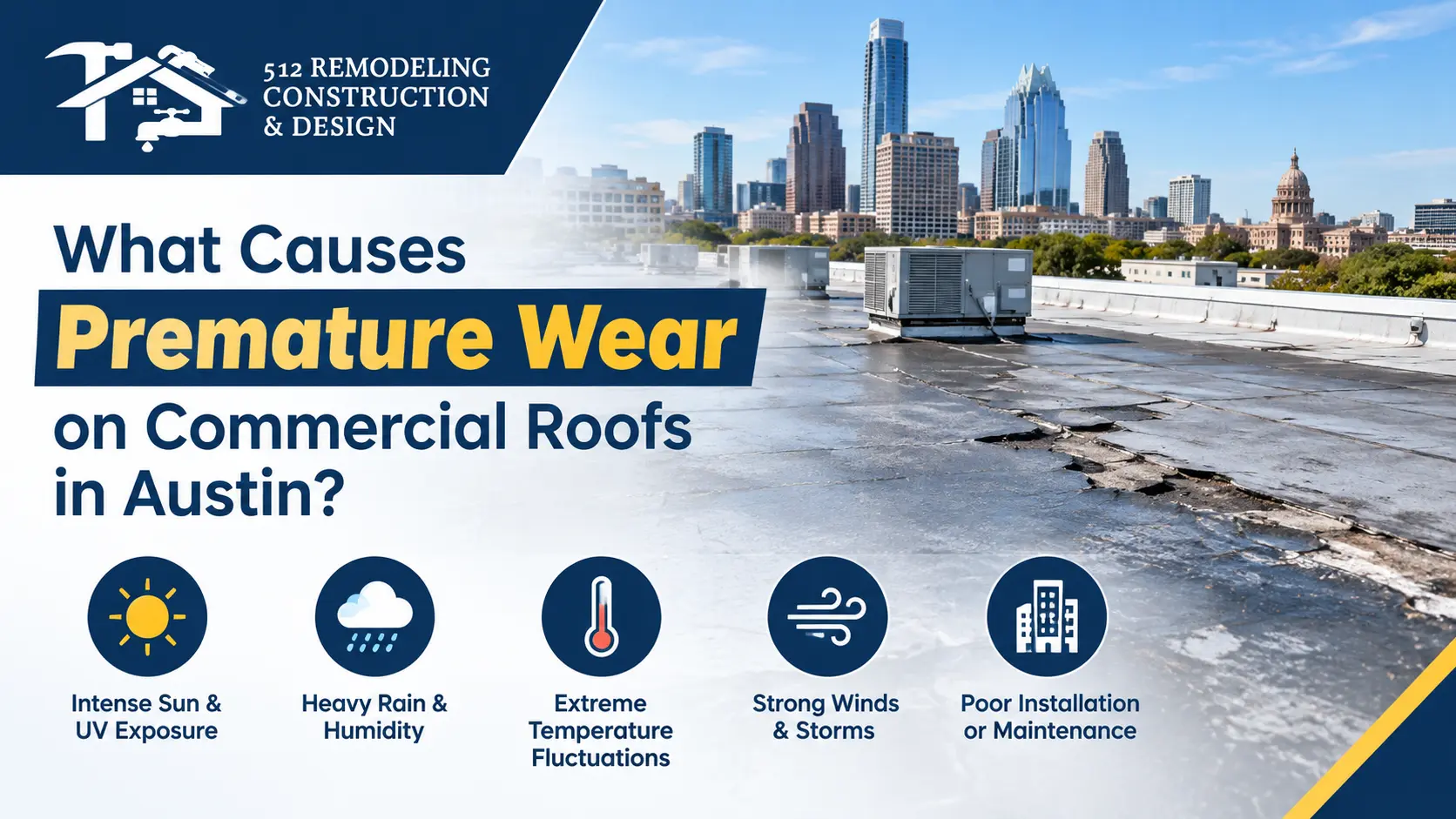
Summary: Austin commercial roofs face severe conditions, including heat, rain, seasonal temperature swings, runoff problems, and weight from employees and construction activities. Understanding these causes can help property owners spot early warning signs and keep their roof serviceable longer. This guide explains the most common causes of such early failures in commercial roofing systems.
A commercial roof can look perfectly sound while damage quietly develops underneath the surface. For Austin property owners, intense heat, UV exposure, heavy storms, standing water, and everyday roof traffic can accelerate deterioration. The frustrating part is that these issues often go unnoticed until they lead to leaks, damaged interiors, or expensive repairs. Understanding what causes premature wear helps property owners spot warning signs early and act before a manageable roofing concern becomes a major disruption.
Austin Heat
The sun’s heat and light adversely impact commercial roofing services in Austin. The ultraviolet rays reduce the roof surface over time, and the continuous expansion and contraction as a result of the heating and cooling cycles over time reduce the original surface area. This stress can result over time in cracking and damage to surfaces and failure of seams. A roof that has had strong sun exposure in the past years and still looks young may, therefore, look prematurely old. When selecting commercial roofing services in Austin, roof owners ought to acknowledge that the climate will impact the lifetime of their roofing solution.
Standing Water
After a rain, leftover water trapped on a commercial roof can be a continual stress. If there are drainage issues, blocked outlets, or areas where water is not flowing properly, the water can pool rather than run off properly.
These can be more apparent during the heavier rain events in Austin. Buildings that have standing water, such as puddles around seams, penetrations, and other weak points, could contribute to deteriorating conditions.
It is important that the property owner be aware of any areas that consistently hold water following the rain. Ponding is not only an unsightly problem; it can be a sign of a drainage or roofing problem.
Storm Damage
Austin, Texas, can be susceptible to hail, wind, and thunderstorms that can cause unexpected roof damage. Materials can become dislodged, broken, or compromised on exposed surfaces, or in seams and other weaker spots due to strong weather.
While many storm damage issues are apparent, there are others that may not be until moisture penetrates the roofing system. Strengths may also be exacerbated by repeated storms.
If a severe storm is a possibility, owners of structures can look for signs of holes or any other visible damage, as well as any sign of water intrusion, before the issues become a problem. Especially when the roof has sustained damage from storm events in the past, prompt attention is critical.
Poor Workmanship
Roofing materials have poor performance if the installation or previous repair work is not done properly. Seams that are not handled properly, flashing issues, or defects in repair work can lead to potential weak points that can create further issues in the challenging environment here in Austin. Inadequate seam closure, flashing problems, or failed repair work can present potential weak points that can easily become an issue in this demanding environment.
These problems could take some time to become apparent. Instead, repeated forces of heat, rain, and wind will slowly show cracks.
The property owner should be looking for commercial roofing services in Austin based on their experience and workmanship, as these aspects can affect the performance of the roofing system over time.
Roof Traffic
Commercial roofs can be stepped onto for inspections, equipment checks, maintenance, or any other activity associated with the construction. Excessive person-induced strain on roofing surfaces, especially in sensitive areas.
Surface damage or punctures, or deterioration may be caused by repeated movement. Property owners should be cognizant of the frequency of roof access and determine whether there is unnecessary traffic on the roof.
Restricting access to the roof helps prevent unnecessary physical burden and contributes to the roof’s condition.
Small Problems
Commercial roof failures, in particular, often stem from not addressing minor issues in time.
Moisture can seep in through a small hole. A broken seam may further fail over time. When the drainage point is blocked, it may cause the pond to become waterlogged again. Once water starts infiltrating the weak spots, the initial issue could be a lot more complex.
That’s why property owners shouldn’t wait until they notice and smell a leak inside their homes to address roofing issues. Any early signs should be investigated.
Structural Stress
Temperature change, settlement, construction activity, and other structural events cause movement in commercial buildings. Roofing systems must accommodate sizable tolerances; however, excessive movement can affect seams, joints, penetrations, and transition areas.
Unusual roof deterioration warrants special consideration in a building that has recently undergone substantial changes.
It is beneficial to determine if damage is isolated or if it will be attributed to larger property movement and guide a property owner as to what action they should take next.
Look out for Warning Signs
It’s not always a big leak that is the first sign of interior roof deterioration. It is recommended that the property owner be alert for:
- Recurring water stains.
- Water accumulations from rain storms.
- Crackled or worn surfaces.
- Damaged seams.
- Visible storm damage.
- Repeated interior leaks.
All areas that do not match the surrounding roofing. All areas that have different coloring than the surrounding roofing.
These symptoms can be detected with visual inspections at an early stage. After major storms, further inspection can help, especially if roofing issues occurred before the event.
Protect Your Roof
Many factors can contribute to premature commercial roof wear. A roof’s lifespan can be shortened by the heat, sun, storms, standing water, foot traffic, workmanship defects, and failure to repair damage.
The answer is to monitor the roof regularly, address early warning signs ASAP, and ensure any issues are professionally assessed before they become more complicated. Property owners needing commercial roofing services in Austin can benefit from a roof assessment to understand its condition and what needs to be addressed. However, if you are searching for a home remodeling contractor near me, call us today!
FAQs
1. What causes premature commercial roof wear?
Deterioration can happen early due to heat, exposure to the sun, precipitation and standing water, lack of proper cleaning or maintenance, structural migration, or if repairs aren’t completed in a timely manner.
2. Does Austin’s weather affect commercial roofs?
Yes. Commercial roofing systems can be subjected to intense heat, heavy rainfall, strong sunlight, winds, and hail.
3. Is standing water on a commercial roof a problem?
Yes. Ponding water may be a sign of problems with the surface or its drainage, and it may cause prolonged stress on roofing materials.
4. How can I identify early roof damage?
Inspect for ponding water, cracks, damage to seams, water stains, flash flood damage, and frequent leaks.
5. When do we need to inspect a commercial roof?
If you begin to see persistent leaking or any symptoms like visible damage, standing water, or damage after storms, a professional assessment is recommended!